
Diageo may not continue its Johnnie Walker Explorers’ Club Collection whiskey line, under a recent New York Supreme Court order granting a petition for a permanent injunction filed by a not-for-profit organization with the same moniker. The facts are interesting (they always seem to be in these cases), the order well-written, and the lesson clear–so let’s take a look.
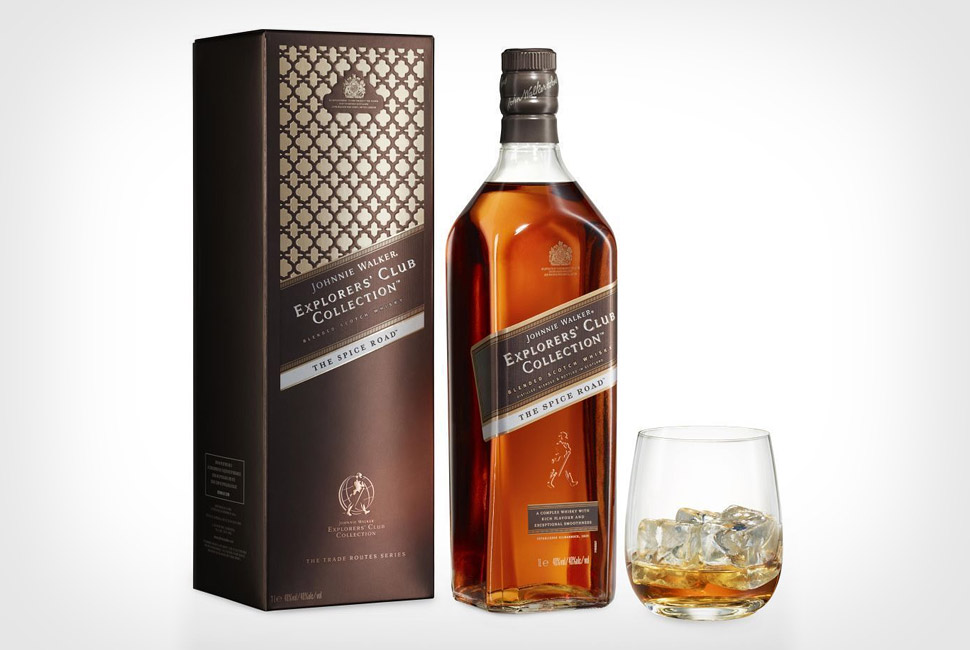
Johnnie Walker Explorers’ Club
Diageo, owner of the Johnnie Walker brand, launched its “Explorers’ Club” line of whiskey in 2012. It was apparently quite successful, and earned Diageo around $50 million over a sixteen-month period.
The problem? There’s an actual Explorers Club, with a storied past. The Explorers Club, Inc. (the “Club”) is a not-for-profit organization based in New York City dedicated to, as the name suggests, to “inspire exploration” and maintain a “spirit of fellowship among all explorers.” It was formed in 1904, and members of the Club were first to the reach both Poles, the summit of Mount Everest, and the Moon.
The Club was bothered by what it perceived to be Diageo’s attempt to profit from the reputation (and perhaps the mystique and allure of exploration fostered by the Club) the Club had built for over a century. The Club never licensed its namesake to Diageo or otherwise allowed Diageo to use it. The Club believed that Diageo marketed its Explorers’ Club Collection in an effort to conjoin its products to notions of adventure, travel, exploration, discovery–the very ideals the Club has promoted. So in 2013, the Club sent a cease-and-desist letter to Diageo, telling them that Johnnie Walker Explorers’ Club “may dilute [the Club’s] property rights and serves to confuse the public.” The two parties attempted to reach an amicable settlement but failed.
The Club brought a petition for a permanent injunction against Diageo in New York Supreme Court, New York County, to prevent Diageo from using the Explorers’ Club name. On August 4, 2014, Judge Ramos granted that petition. The basis for the Club’s petition lies in New York General Business Law § 135. That statute applies to “benevolent, humane, or charitable organizations” only, and provides:
No . . . corporation shall, with intent to acquire or obtain for personal or business purposes a benefit or advantage, assume, adopt or use the name of a benevolent, humane or charitable organization incorporated under the laws of this state, or a name so nearly resembling it as to be calculated to deceive the public with respect to any such corporation. . . . [A]n application may be made to a court or justice having jurisdiction to issue an injunction, . . . and if it shall appear to the satisfaction of the court or justice that the defendant is in fact using . . . a name so nearly resembling it as to be circulated to deceive the public, an injunction may be issued by said court or justice, enjoining and restraining such actual or threatened violation, without requiring proof that any person has in fact been misled or deceived thereby.
What’s unique about this statute is that the petitioner does not need to show “proof” that the public has in fact been misled or deceived by a corporation’s use of the name. Often, for a consumer or business to prevail under a consumer protection or false advertising statute, they need to show the court some indication that people were, in fact, deceived. Commonly that proof is made through consumer surveys. For example, in this case, a survey could be devised in which consumers are shown a bottle of Johnnie Walker Explorers’ Club, or an advertisement, and asked: “What comes to mind?” If a consumer were to refer to the Explorers’ Club in any way, that would be evidence that people connect the whiskey to the charitable organization in their minds–pretty strong evidence against Diageo. After that open-ended question, consumers would be asked some more pointed and specific questions driving at whether they form an association between Johnnie Walker Explorers’ Club whiskey and the Explorers Club.
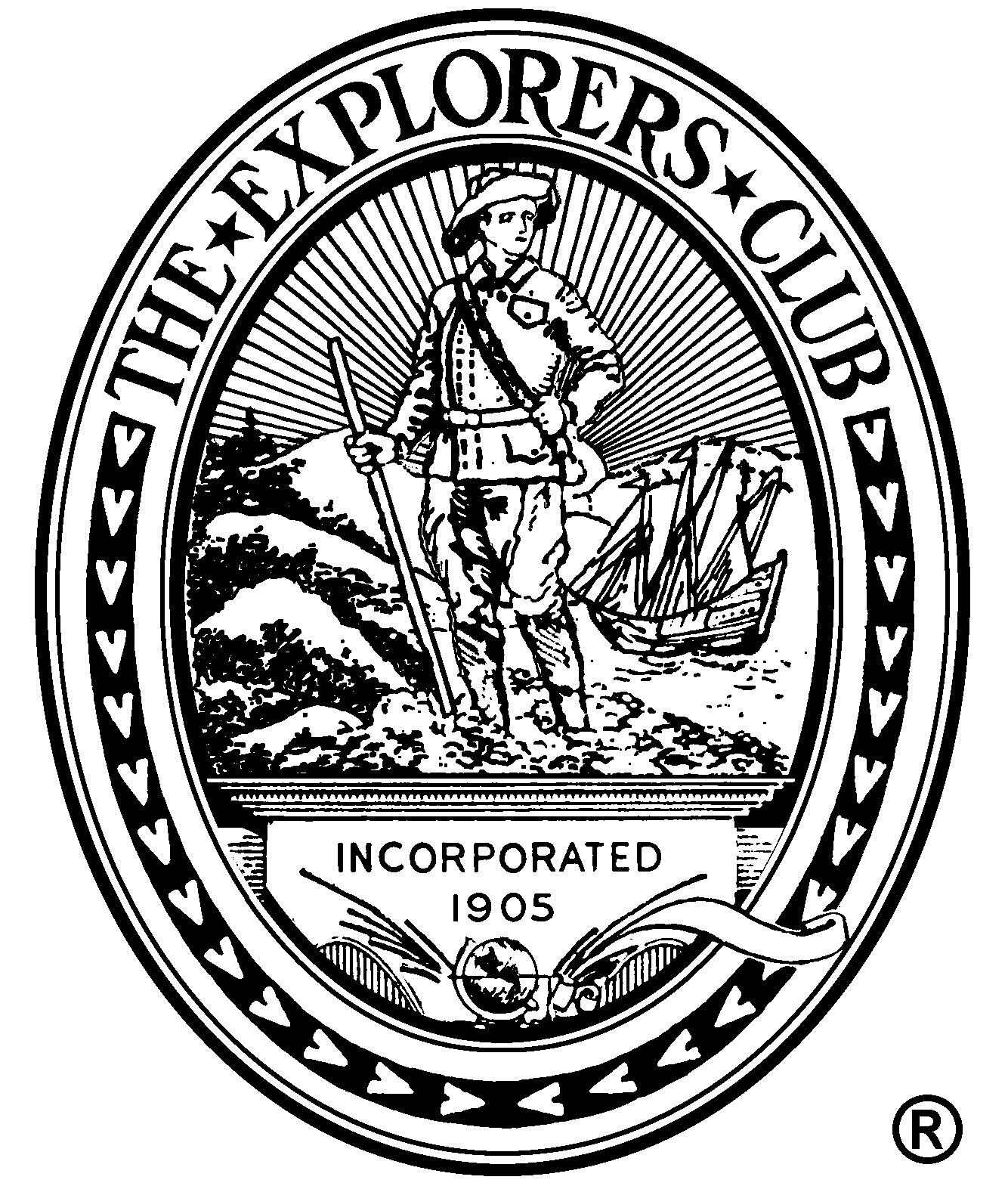
The Explorers Club
But this statute requires none of that from a charitable organization. Nonetheless, the Club came forward with what the court considered powerful evidence. It provided the court evidence that the Club “received numerous inquires regarding an affiliation between the Club and the whisky, including by its own members.” The Chair of the East Asia Chapter of the Club submitted an affidavit in which he told the court that he personally thought the Club was an official sponsor of Johnnie Walker. The Chair of the Norway Chapter of the Club did the same. To be sure, these are self-serving affidavits, which could be granted little weight. But yet more evidence came from the President of the Club. He swore in an affidavit that a sales representative in an airport duty-free shop told him that there was, indeed, an affiliation between Johnnie Walker and the Club, and that the whiskey was actually made in the Club’s New York headquarters. This conversation was video recorded and provided to the court. The Club also provided photographs of its headquarters and Diageo’s airport displays promoting the whiskey, showing a striking resemblance.
In his opinion, after lauding at length the accomplishments and history of the Club, Judge Ramos held that the Club sufficiently showed that Diageo adopted “a name so nearly resembling [the Club’s] to be calculated to deceive the public,” and enjoined Diageo from using the name:
The Club has demonstrated that it . . . has been using the name “The Explorers’ Club” uninterrupted for nearly a hundred years, and has retained a distinct identity. Diageo has adopted a nearly identical name . . . In addition to this obvious similarity, the latter’s tie-ins to the Club’s image and reputation of adventure and exploration in its marketing and commercial displays are blatant. . . . [and] leads to the inescapable conclusion that . . . Diageo adopted a “name so nearly resembling [the Club’s] to as to be calculated to deceive the public.”
In what has to be a severely disappointing result for Diageo, we are reminded how quickly a profitable line can come to a swift termination after an unfavorable court opinion. Indeed, Diageo’s website is already being scrubbed of all reference to the doomed whiskey line, and Diageo’s other customer-facing media are sure to follow. Diageo will likely appeal; if they do, I’ll be sure to post.

 Subscribe to this blog via RSS
 View Our LinkedIn Profile
 Follow Us on Twitter
 Friend us on Facebook