
You’re a brewer ready to launch a new label. You received approval from the Alcohol and Tobacco Tax and Trade Bureau for your label. You’re ready to go; you launch.
A few months later, you’re served with a lawsuit. The plaintiff is a consumer, perhaps in another state. The plaintiff alleges that some aspect of your label is misleading, and they seek to certify a class of similarly-minded consumers against you. “But my label is fully complaint,” you say, “approved by the federal government!”
This has been a common defense trotted out not only by brewers, but by manufacturers of any food or beverage whose labeling is regulated by some government entity (FDA is a common one). Sometimes this defense succeeds, sometimes not. I’d like to highlight a recent opinion from the Southern District of Florida in a case against Anheuser-Busch (“AB”) concerning its Beck’s brand, in which this defense failed AB in its attempt to dismiss the case in its early stages.
The opinion is lengthy, so let’s hit on only the key points. Plaintiffs are consumers of Beck’s residing in Florida, New York, and California. They sued under the states’ respective consumer protection statutes:
- Florida Deceptive and Unfair Trade Practices Act (Fla. Stat. § 501.201 et seq.)
- New York General Business Law § 349
- California Unfair Competition Law (Business and Professions Code §§ 17200 et seq.)
- California Consumer Legal Remedies Act (Civil Code § 1750 et seq.)
believed they [we]re purchasing German beer, imported from Germany, brewed using German requirements and with German ingredients, when in fact, they [we]re purchasing beer brewed in St. Louis, Missouri … with ingredients from the United States.
Specifically, the plaintiffs pointed to the following statements:
- “Originated in Germany”
- “German Quality”
- “Brewed Under the German Purity Law of 1516”
The plaintiffs say they were harmed because the St. Louis-produced beer had “less value” than what they thought they were getting: beer produced in Germany. The purchases of a handful of plaintiffs is minuscule, so the plaintiffs filed their complaint as a putative class action, meaning they were asking the court to certify a class down the road consisting of all purchasers who were similarly duped.
AB moved to dismiss the case. I’ll discuss two of its main arguments.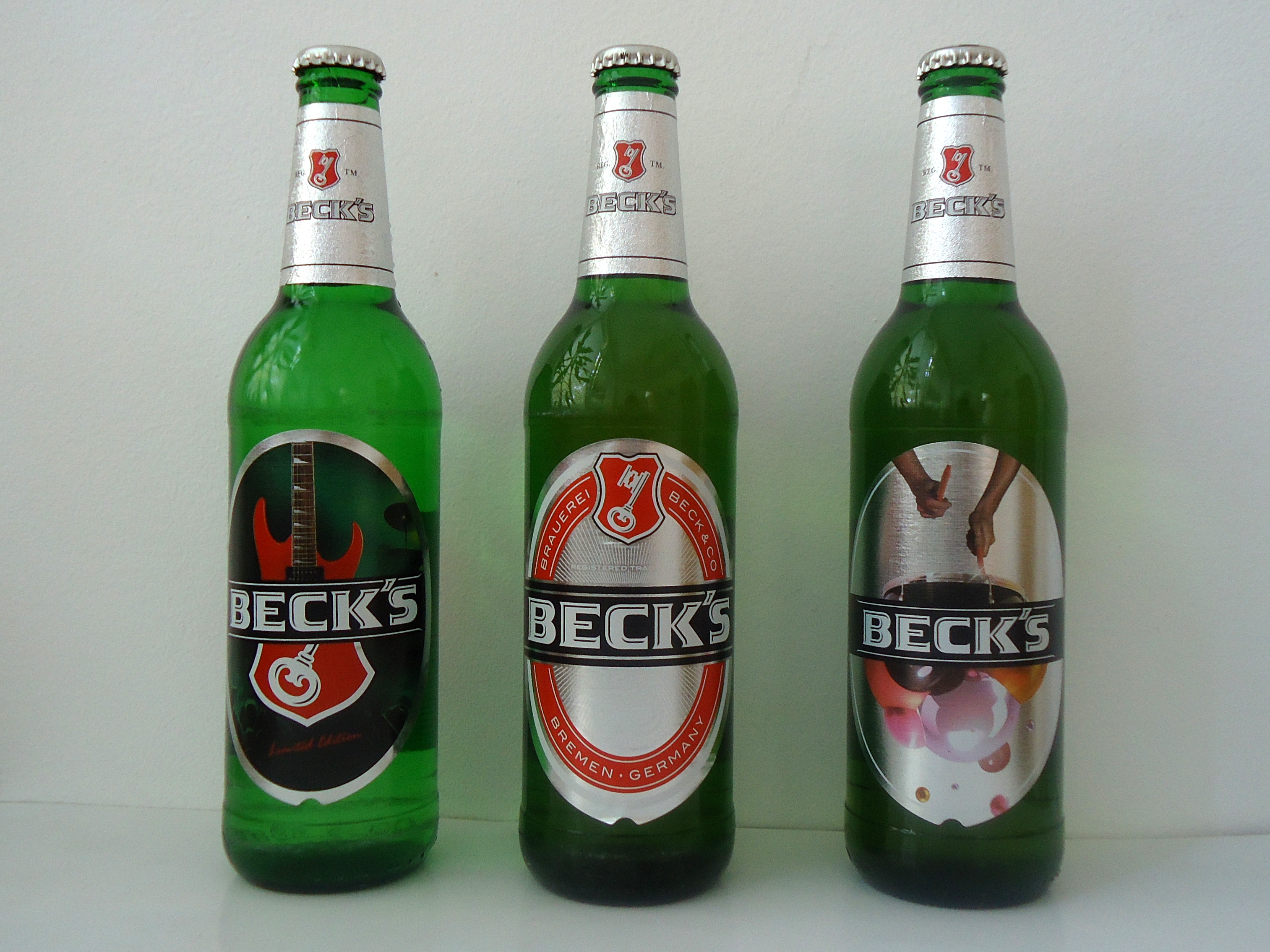
First, AB argued that its statements are protected by safe harbor provisions in the Florida and New York statutes. For example, New York General Business Law states:
In any such action it shall be a complete defense that the act or practice is, or if in interstate commerce would be, subject to and complies with the rules and regulations of, and the statutes administered by, the [F]ederal [T]rade [C]ommission or any official department, division, commission or agency of the United States as such rules, regulations or statutes are interpreted by the [F]ederal [T]rade [C]ommission or such department, division, commission or agency or the federal courts.
The court determined that AB was not entitled to “safe harbor” protection under these statutes. Even though TTB had approved AB’s labeling, the plaintiffs alleged that the labels (on the cans and bottles themselves) were not visible to a consumer until after she purchases a 12-pack of cans (which are fully enclosed by a container) or a 6-pack of bottles (unless the consumer removes a bottle from the carton and inspects it). The court also noted that the plaintiffs took issue with AB’s “overall marketing campaign,” which is beyond TTB’s purview, and not regulated by any federal agency.
Second, AB argued that no reasonable consumer could be deceived by its representations. It pointed to its bottles and cans of Beck’s, which stated: “Product of USA” and “BRAUEREI BECK & CO., BECK’S © BEER, ST. LOUIS, MO.” But the court found that these statements were hard to see (they were on the underside of the can) and a reasonable consumer would not necessarily look at them before deciding whether to buy Beck’s. AB also argued its claim of “German Quality” constituted “puffery.” “Puffery” is a legal term of art that refers to general, subjective, or unverifiable claims that cannot be substantiated; they cannot be proven true or false, like “the Best Cup of Coffee in New York!” An advertiser cannot be held liable for those. The court said, however, that the “German Quality” statement, when evaluated in connection with other statements, was not “puffery.” Personally, I’m not sure I agree–how can one prove that statement is false?–but there you have it.
The parties are currently briefing plaintiffs’ motion for class certification. If they fail, plaintiffs would suffer a major blow: their potential damages, individually, are a pittance. The case would likely go away. If they succeed, the amount of potential damages becomes meaningful, and the case would go forward. I will track this case and post any interesting updates.

 Subscribe to this blog via RSS
 View Our LinkedIn Profile
 Follow Us on Twitter
 Friend us on Facebook